

Read on below for the list of houseplants that are non-toxic for children and pets.
Safe House Plants
Although there are many house plants that are considered safe, I will focus on varieties that are popular or common, including:
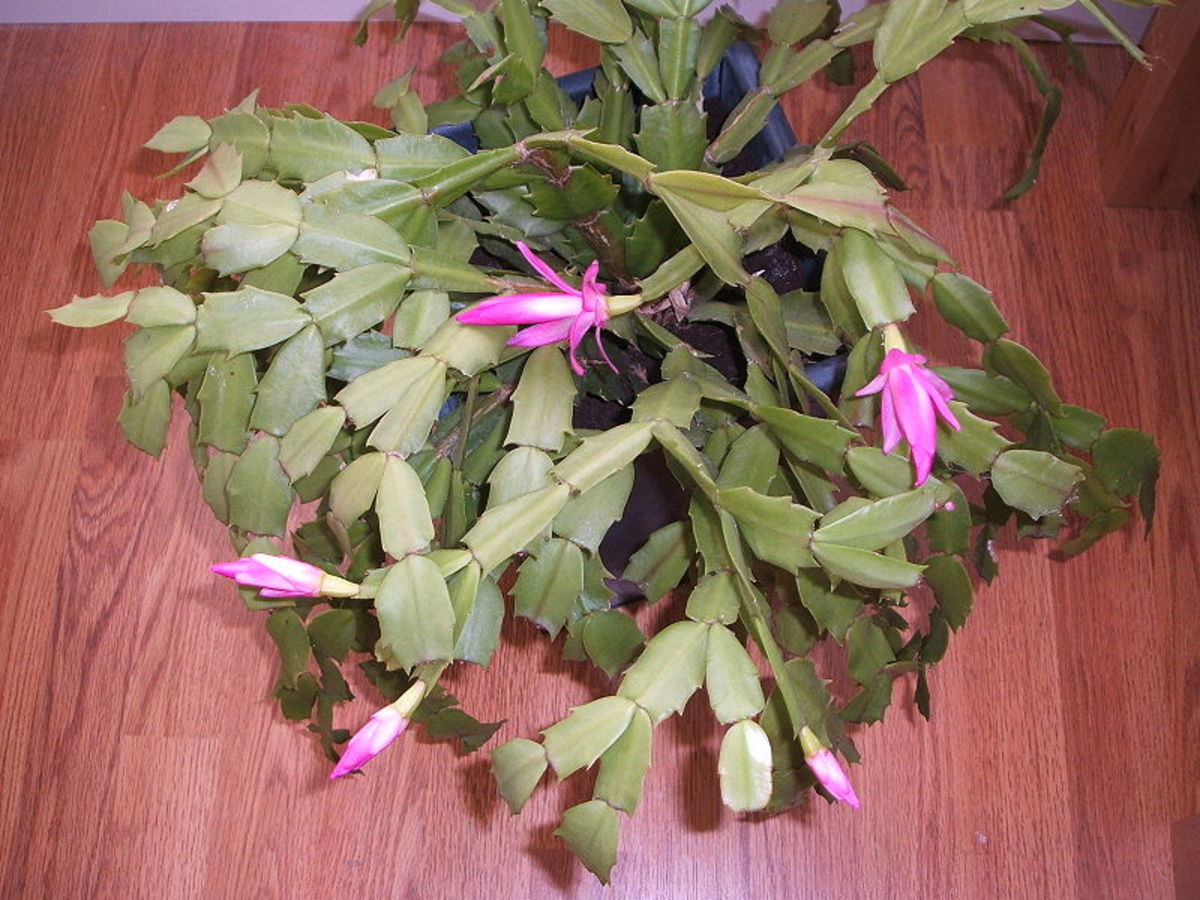
- Christmas Cactus
- Coleus
- Boston Fern
- Spider Plant
- Jade Plant
- African Violets
- Miniature rose
- Wandering Jew
Many of these are plants you may already have, or you may know someone who has a few. If you have toxic plants, consider a “plant swap” with a friend who may have pet or child-safe plants, but who has no pets or children.
This is much kinder than simply throwing plants out in the trash to die, and you and your friends will all have the chance to experiment with new plants.Christmas Cactus | SourceChristmas Cactus
Perhaps the safest of all houseplants, the Christmas cactus (Schlumbergera) has a scary name, but poses no threat. Not only is it non-toxic, the fronds have no stickers.
- Like many other succulents, the Christmas cactus can be easily propagated from a stem cutting.
- Unlike other plants, they bloom November through January, bringing much needed color to the winter home.
- They can be moved to a semi-shady location outside during the summer, but remember that they are not as heat and drought tolerant as other cacti.
These plants are also known as “Thanksgiving Cactus” and “Holiday Cactus”.
Scarlet coleus is safe for children, but not recommended for pets. | SourceColeus
Coleus is only safe for humans. It is listed by the ASPCA as toxic to dogs and cats.
Although coleus (Solnostemon) is more commonly regarded as a colorful annual for flower gardens and borders, it can be easily grown indoors as well.
Although the coleus will bloom, they are usually chosen due to their vibrant leaves, which are available in colors such as purple, yellow, orange and green. There are even variegated varieties.
These plants can be grown from seeds, or they can be propagated from a plant owned by a friend. If someone has extra seedlings, they can be transplanted to a pot and moved indoors. If you don’t want more coleus, be sure to pinch off the flowers before they go to seed, as one plant can parent hundreds of babies!
NOTE: Although coleus is listed as toxic for animals, I have hundreds in my yard and the pets never mess with them. Perhaps they are bitter. However, in the house, where animals become bored, it is best to take precautions and keep these plants in a safe area.

See more at Dengarden
Pages: 1 2


