

Read on below for the next section of this article by Valerie Easton on winter cold and why it is necessary for plants to bloom.
Although winter can be like a slap in the face after a warm, lingering autumn, there?s usually plenty of warning. Chilly fall mornings find roofs and evergreens delicately coated with sparkling white; then, as the day warms up, the garden rebounds, fluffs out, and continues to bloom and fruit as if never nipped. These light, teasing frosts can go on for weeks, but the time will come?in September, October, or even November, depending on your latitude and altitude?when the temperature dips into the mid-20s and a hard, killing frost will have its way with your garden. After weeks of frosty flirtation, this time most plants without a stout woody stem will be reduced to compost. Winter has arrived in the garden, no matter what the calendar says.
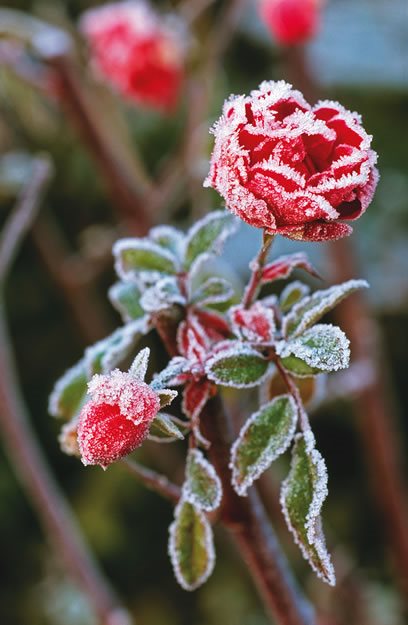
The last roses of the season.?Photo by: Marianne Majerus/MMGI.
As soon as I?ve started to pull on warm gloves and a wooly hat before going outdoors, I?m on the lookout for hints of that first serious frost. In anticipation of its inevitable arrival, I dig the dahlias and cart pots of aeoniums and fragrant-leaved geraniums indoors. I rush out to pick the last raspberries and the ?Sungold? tomatoes, turned sweeter by their brush with the impending freeze. I pull pots close to the house for protection and spread a blanket of insulating mulch over beds and borders. When the frost still sits lightly on the pumpkin, it?s time to pick the last of the zucchinis, tender lettuces and herbs, grapes, and green tomatoes.
See more at the Garden Design Magazine


