

Read on to discover the flowers suggested for blooming at this season
Some of the plants listed below bloom only in fall. Others may begin their bloom season earlier in the year. And some of the annuals that are normally considered spring flowers will flourish in the cooler fall weather, if only for a short time.Classic ChrysanthemumMums, specifically florists? or garden mums, have become the go-to plants for a fall garden. You can go with the traditional yellow-, orange- and red-flowered mums or find varieties with flower colors ranging from white to purple. As a bonus, the flower shapes are incredibly varied; you can find quill-like petals, daisy shapes and pom-pom forms. To make the decision even more interesting, heights can range from 1 foot to 6 feet.
Common names: Florists? chrysanthemum, garden mum
Botanical name: Chrysanthemum x grandiflorum
USDA zones: 4 to 10 (find your zone)
Water requirement: Regular
Light requirement: Full sun
Mature size: 1 foot to 5 feet
Growing tips: Plant blooming varieties in fall in well-draining soil about a month before the first frost for quick color. Then cut them back to about 8 inches above the ground when they finish blooming. Cover with sand, sawdust or a noncomposting mulch if you want. If your soil is very damp through winter or you live in a very cold climate, you may need to dig up the plants and overwinter them aboveground. Divide every few years.Sturdy Aster
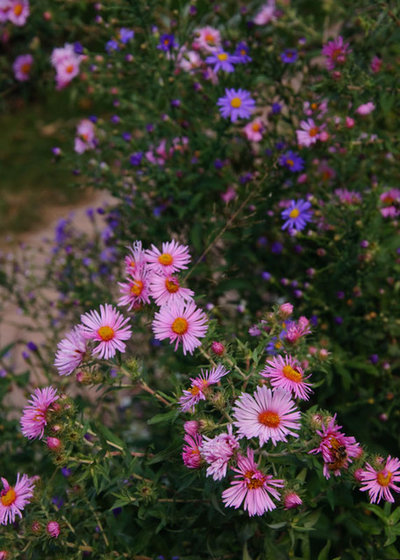
Following closely on the heels of mums in popularity are the asters. There?s a reason these perennials are favorites: Their pink, blue and purple flowers (usually with a bright yellow center) offer a cool contrast to the warmer autumn colors of the changing leaves and grasses. They?re also hardy in almost every climate. Aster x frikartii ?Monch? and ?Wonder of Strafa? bloom from summer to well into fall, and even through winter in the mildest areas, but they don?t always live as long as other species. The New England aster varieties are notable for their range of colors and their adaptability to wet soils. The similar New York aster, sometimes called a Michaelmas daisy, can range in size from under a foot to 4 feet tall.
Common names: Aster, New England aster, New York aster, Michaelmas Daisy
Botanical names: Aster x frikartii, A. novae-angliae, A. novi-belgii
USDA zones: 3 to 10
Water requirement: Regular
Light requirement: Full sun
Mature size: 1 foot to 5 feet
Growing tips: Fairly tolerant, but grow best in fertile soil. The taller asters may need staking and you may have problems with mildew. Divide if plants become invasive or woody.


Go to the next page for more fall blooming flowers
[nextpagelink][/nextpagelink]


Reminds me of Glorias’ Garden and the Beautiful painting in her living room !! ??
Beautiful!!!
Tammy Ballengee-Conner…ideas maybe
Eldora Levert these are those plants you brought.
Pretty
I have both the red and pink sedum
I have this one and it never lets me down!!
Tanya Fenech Matzelt
AUTUMN JOY
Love my tall sedum and so do my bees!!!
Jerry Montgomery
Beautifully
Can anyone tell me what this plant is?
There is many types of Sedum ,I love them all
It looks like Amaranth but I have only seen red ones.
I love it.
Warner Hinkley
I have these. I have heard you can break them off, stick in the dirt, and they will grow.
Michelle Osegueda-Williams
They’re perennial plants ! Mine has pinkish flowers they multiply year after year !!
Pretty!!
I lvoe sedum
Go to plant identification on fb
Cathy Zly
Pretty!!
Red sedum and I just got rid of mine because it was taking over my garden
Adriel Resh