

After the joy of seeing the early spring flowering bulbs in full bloom it is always sad to watch their decent into the untidy mess of fallen petals and drooping stems. How you deal with this situation depends on whether you are treating the bulbs as annuals or perennials. When daffodils are grown as perennials it is generally agreed that the leaves should be left to die back, but some people tie them or use rubber bands. This article by Lauren Dunec Hoang which I found on the Houzz website gives tips on aftercare for six of the common spring flowering bulbs.
Once flowers and foliage fade on daffodils, tulips and other spring-blooming bulbs, do you leave them in the ground or dig them up? In short, it depends on bulb variety and whether you?re treating the bulbs as annual or perennial plants. Read on to learn how to take care of bulbs after they finish blooming.After-Bloom Care for Spring-Blooming Bulbs Grown as Annuals
Although most spring-flowering bulbs are ?perennials,? horticulturally speaking, as they come back year after year, many people treat bulbs as ?annuals,? planting new ones each year.
This decision makes sense in some cases, since not all bulbs reliably bloom year after year, and not all climates and growing conditions support repeat flowering. Plus, many people enjoy the flexibility of being able to try new bulb varieties or color palettes every year.Tulips are most often planted as annuals, as it?s tricky to get them to bloom again in a container or in the garden.
Lift bulbs. After the bloom finishes and foliage begins to fade, use a garden fork to lift bulbs planted in the ground or a trowel to dig up container-planted bulbs, and add them to the compost pile.After-Bloom Care for Spring-Blooming Bulbs Grown as Perennials
Some bulb varieties are more likely to naturalize and rebloom for many seasons, spreading by bulblets (small, baby bulbs that form at the base of the parent bulb) or seeds to form a larger clump of bulbs next year. Perennial bulbs include daffodils, crocus, muscari, snowdrops and scilla, as well as alliums and hyacinths, to some degree. Tulips, depending on variety and climate, can repeat bloom, but they?re less predictable.

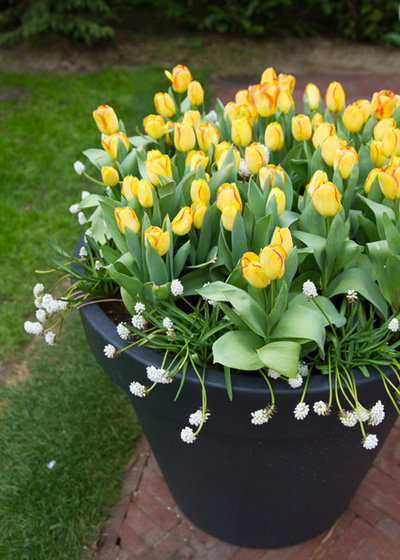

See more at Houzz
Feature photo: Lauren Dunec Design


