

It seems that more and more people are moving from growing vegetables in a conventional kitchen garden setting to using raised beds. This is not surprising since there are many good reasons why growing crops in a raised bed has several advantages over the other method. This article by Rebecca Cuttler which I found on the Houzz website contains seven tips on how to ensure success with raised beds.
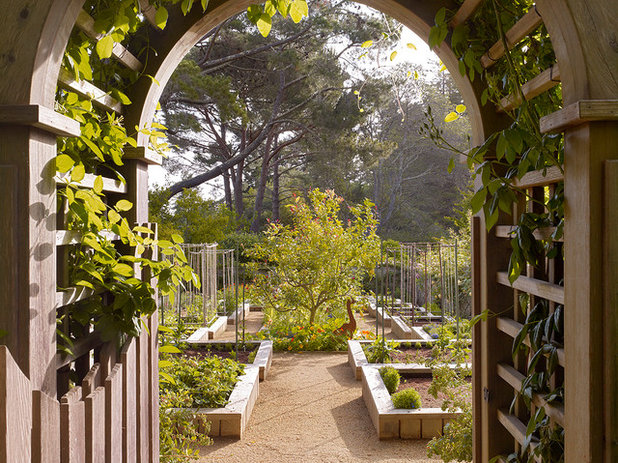
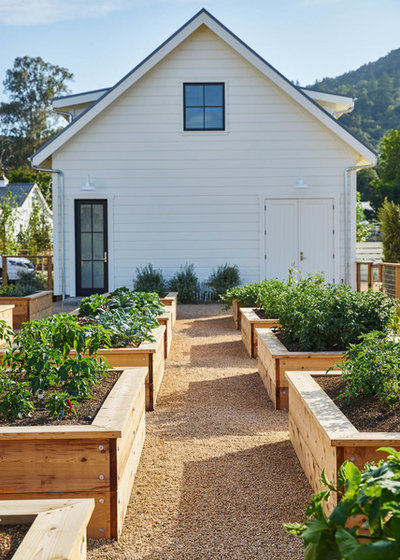
It?s easy to see why raised beds are perennially popular among vegetable gardeners. They can help correct many common garden problems, including poor soil, weeds, drainage issues and uneven slopes. These simple structures provide a defined space in which to build up concentrated areas of high-quality soil rich in organic matter.
Technically speaking, raised bed gardening includes any defined area where soil has been built up to provide a growing area for vegetables, fruits and other plants. While classic raised beds have wood sides, raised beds can be made from any garden-safe material, or even from simply piling the soil up and tamping down the sides with the back of a shovel. Here?s what you need to know to ensure raised bed gardening success.Why Raised Beds for Edibles
- Vegetables need lots of high-quality soil, rich in organic matter, to produce bountiful crops. Raised beds allow you to literally build the soil up. Over time, adding compost to your raised beds can transform even the poorest soil into an oasis. Because you?ll never need to step on the soil, it will remain fluffy and aerated, encouraging roots to grow and thrive.
- Raised beds create a structured space for you to keep your veggie plants organized. They provide an ideal frame for attaching PVC hoops, which keep out bugs or keep in warmth using mesh or row cover material. They also provide an ideal space for square-foot gardening, a popular technique for home vegetable gardeners.
- Raised beds can also save your back ? or your knees. They can be built as high as table height, allowing people with mobility issues to garden from the comfort of a chair.
See more at Houzz
Feature photo: Jackson Derler


